Reducing Errors and Support Calls for 16M+ Users Across ADP's Mission-Critical Timecard Platform
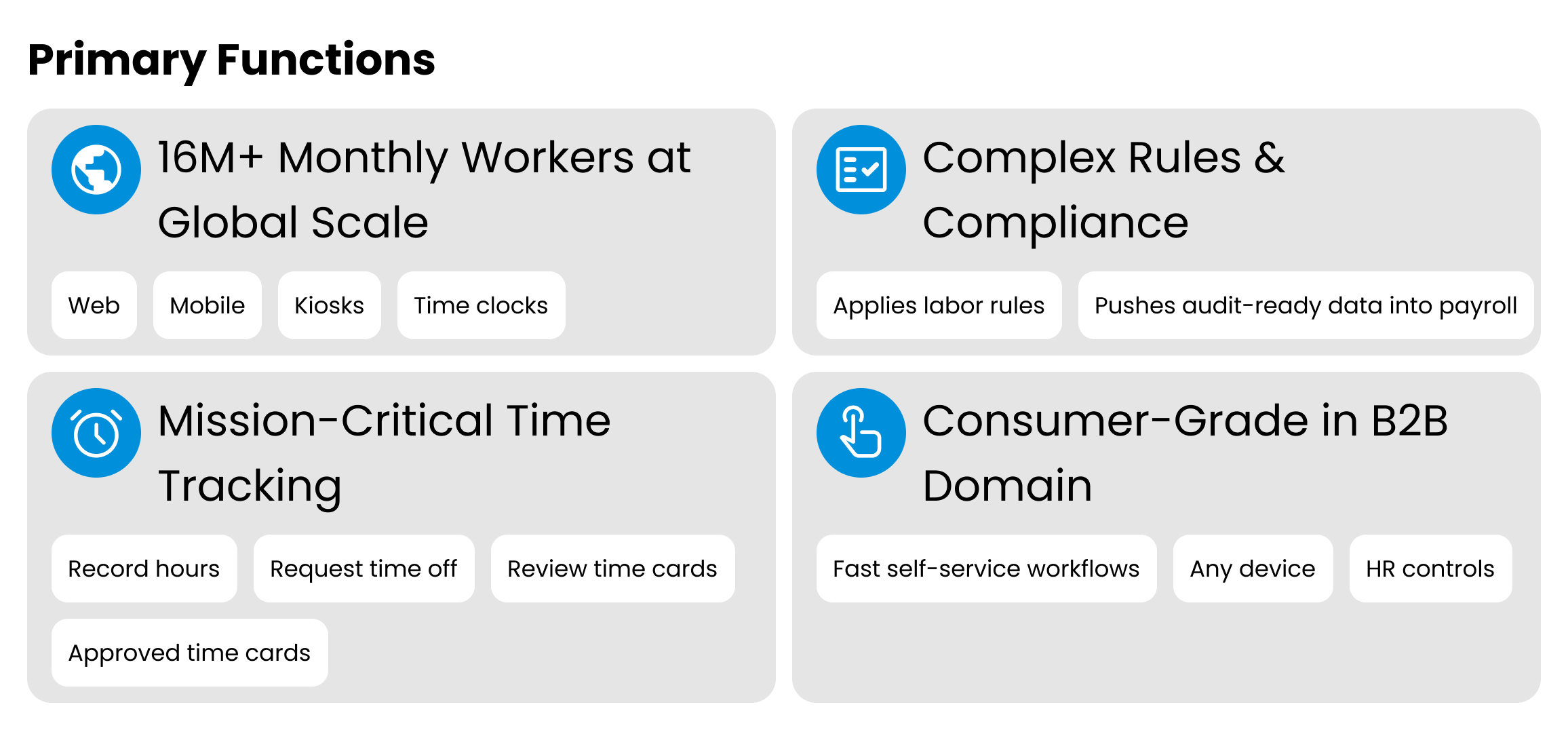
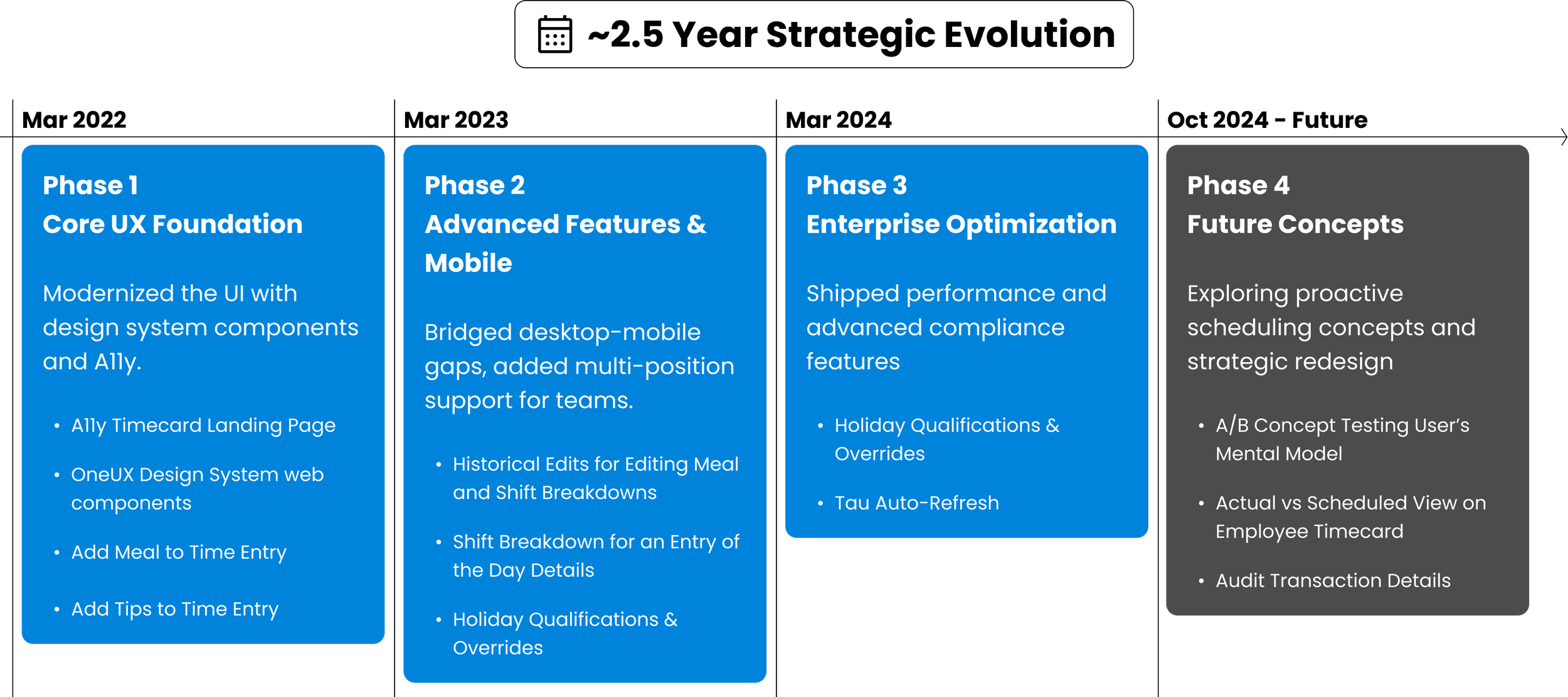
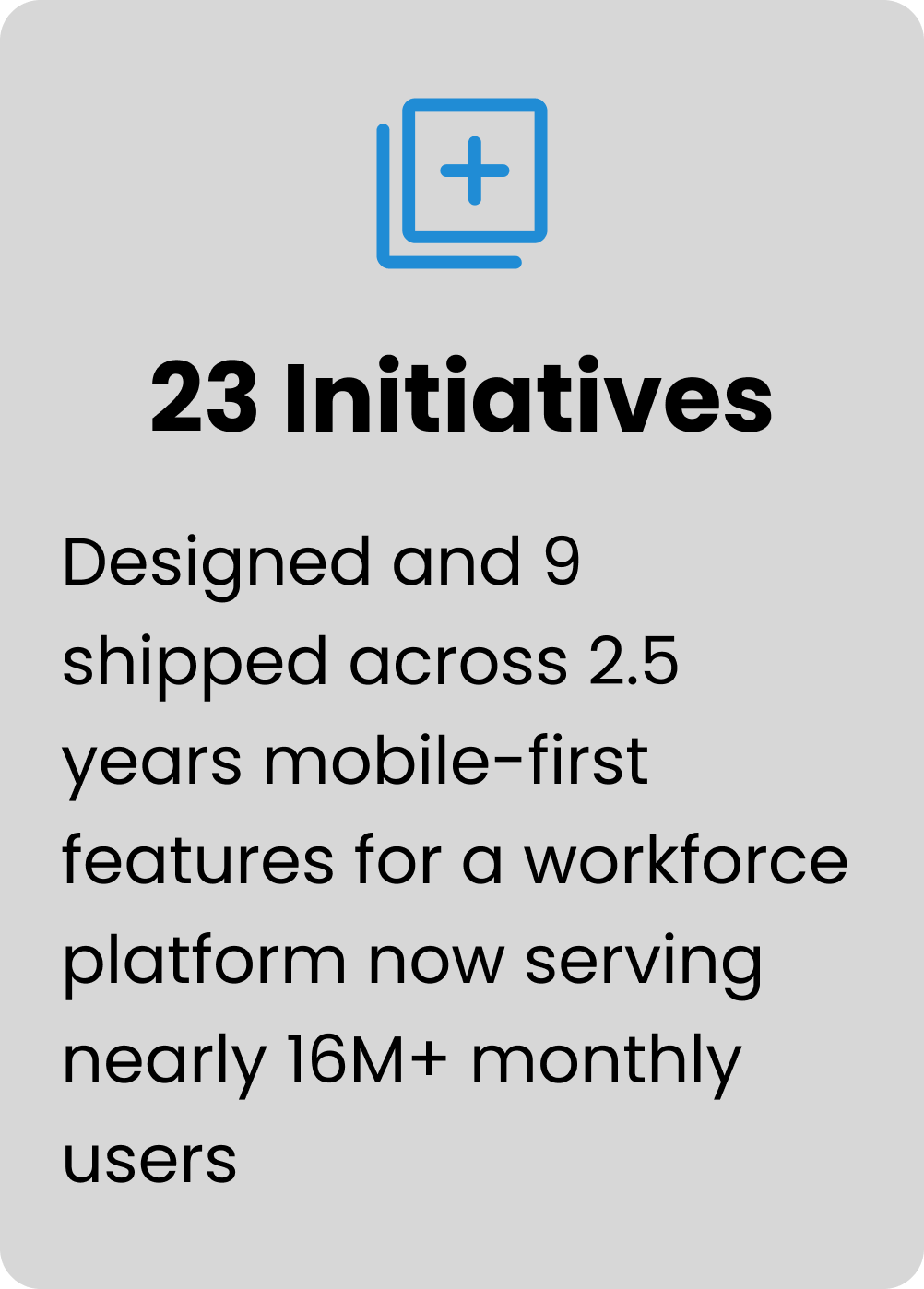
For 2.5 years as the sole Lead UX Designer, I owned UX across 23 initiatives on ADP's Workforce Now Timecard, a compliance-critical time-tracking tool used by 16M+ employees globally.
I streamlined time entry patterns to reduce errors and support calls at scale.
Above: Images are blurred under NDA.
Overview
ADP’s Timecard is a core product of the Workforce Now platform used daily by employees to track hours, request time off, and submit time for payroll processing.



Focus Areas
Timeline
Team








Lead UX Designer
Frontend Product Owner
Backend Product Owner
Content Designer
(5) Developers
(2) QA Engineers
No Researcher?
What I Did
Led as sole UX for ~2.5 years embedded the Timecard team

Collaborated strategically
with Development, Product, Content, Accessibility, and Design System Team

Added mobile functionality
to a legacy Timecard originally designed for desktop

Setup bi-weekly pod meetings
to share designs, collect feedback, and move forward together, reducing blockers

Led 23 and shipped 9 initiatives
while considering technical backend limitations.

Created a “mini-design system”
for future Timecard initiatives to maintain pattern consistency

My Impact
Problem
Challenges
1
2
3
4
Design system that lacked consistently defined refresh patterns and behaviors: we had to establish a new pattern.
Legacy backend couldn't push data automatically: Users had to manually reload before making entries, full-page lockouts looked like freeze, incomplete data visible during load, busy indicators were too subtle.
The team needed to improve the experience without disrupting existing mission-critical payroll workflows.
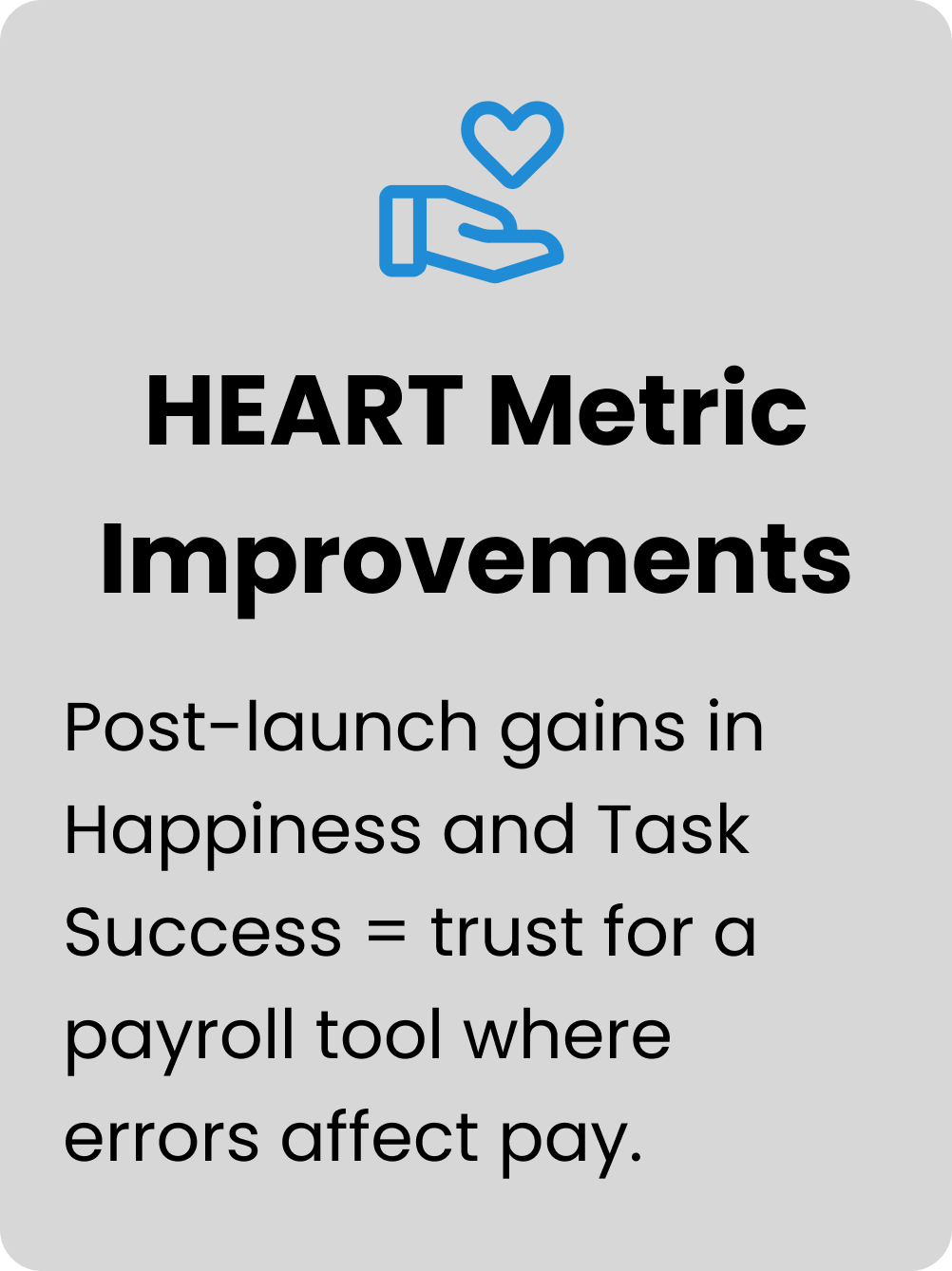
The culture frequently operated without metrics: I focused on what I could impact - clarity, usability, and cross-team alignment. In a more metrics-driven org, I would have benchmarked the current state, tracked HEART-aligned behaviors post-launch, and shared insights to refine future designs and patterns.
Our Situation
Despite widespread usage, parts of the experience were outdated, unintuitive, and frequently criticized by users. ADP account managers received repeated feedback from clients that the timecard:
“Felt clunky”
“Was too easy to make mistakes on”
“Took too long to fill out”
Internally, product owners and support teams surfaced several issues:
Time submission errors were frequent and costly.
1
Users found the interface unresponsive and unreliable.
2
Managers were spending too much time correcting employee timecard.
3
Meanwhile, ADP had released a new backend engine with capabilities that didn’t exist when the original Timecard was built.
How I Solved It
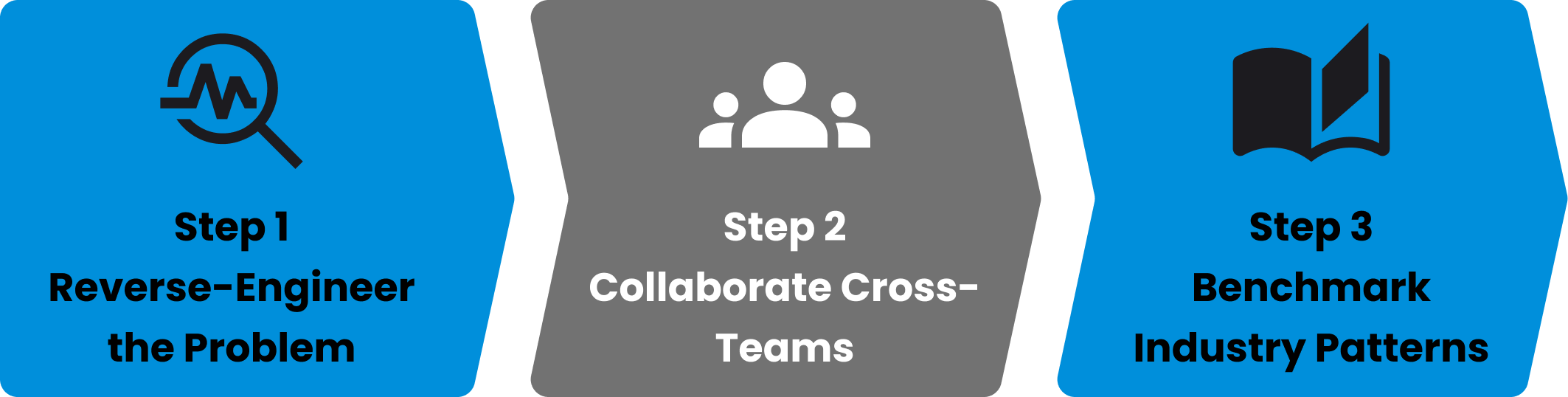
Whenever possible, I prefer to start by reviewing direct user feedback or conducting interviews across industries (hospitality, retail, manufacturing, etc.) to identify the top four to five pain points that will drive design priorities.
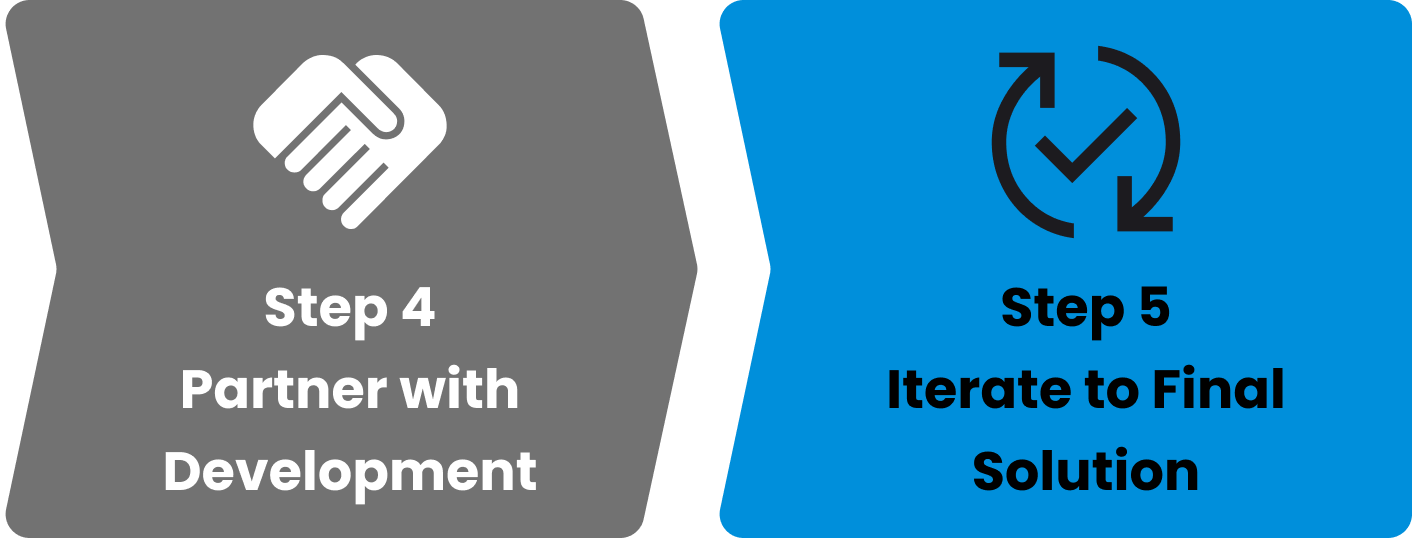
However, to control client relationships and protect their time, ADP only allows interaction with client users through their UX Researchers. In this case we had none available to us, so without access to end users or research data, I took a different approach below: